Container NRVU 418220-7 is forty feet of corrugated steel in faded rust red, with a dent above the left door hinge that nobody can date. It belongs to a leasing company, carries whatever it is given and has no idea where it is. For ninety days this summer, we did.
With the lessor's permission we fitted a battery-powered tracker inside the door frame at a furniture factory north of Ho Chi Minh City. Every fifteen minutes it reported position, temperature, humidity and shock. The box covered about 30,000 kilometres, stood still for 38 days and came home empty. This is its log, leg by leg.
The factory
Phuoc An Woodcraft makes dining furniture from rubberwood and acacia in a shed the length of two football pitches in Binh Duong province. It ships about forty containers a month, nearly all to Europe. NRVU 418220-7 arrived on a chassis at 06:10, one of three empties the carrier's depot had released the night before.
Loading day
Tran Thi Mai, the loading supervisor, walks every box before her crew touches it. She looks for daylight through the roof, sniffs for diesel and taps the floor with a rubber mallet to find soft boards. This one passed, dent and all.
Old boxes are fine. Wet boxes are not. Wet wood in a wet box arrives in Europe with a fur coat of mould.
Mai has turned away two containers this year, both for leaking roofs. Her crew of six stuffed this one in four hours and ten minutes: 64 flat-packed tables, 212 chairs in cartons of two, and bench tops wedged upright along the side walls. They hung eight strips of desiccant from the lashing rings and photographed the load from the doors before closing them. Gross weight on the scale ticket was 11.8 tonnes. Furniture fills a box long before it reaches the weight limit.
The seal
At 10:47 Mai pushed a numbered bolt seal through the door handle and snapped it shut. From then until a warehouse in the Netherlands cut it off, nobody was supposed to open the doors, and our tracker's light sensor confirms that nobody did. The seal number went onto the packing list, the bill of lading and an export declaration filed before the truck left the yard.
To the terminal
The distance from factory gate to ship's rail was 78 kilometres. It took six days.
A night on the road
The truck left at 21:30, after the daytime restrictions on heavy vehicles lift. Nguyen Van Duc has driven the route to the deep-water terminals at Cai Mep for nine years. He covered the road in two hours and fifty minutes, then spent an hour and a quarter in the gate queue behind a line of flatbeds. "The road is easy," he said, one elbow out of the cab window. "The gate is where you lose the night."
Five days in the stack
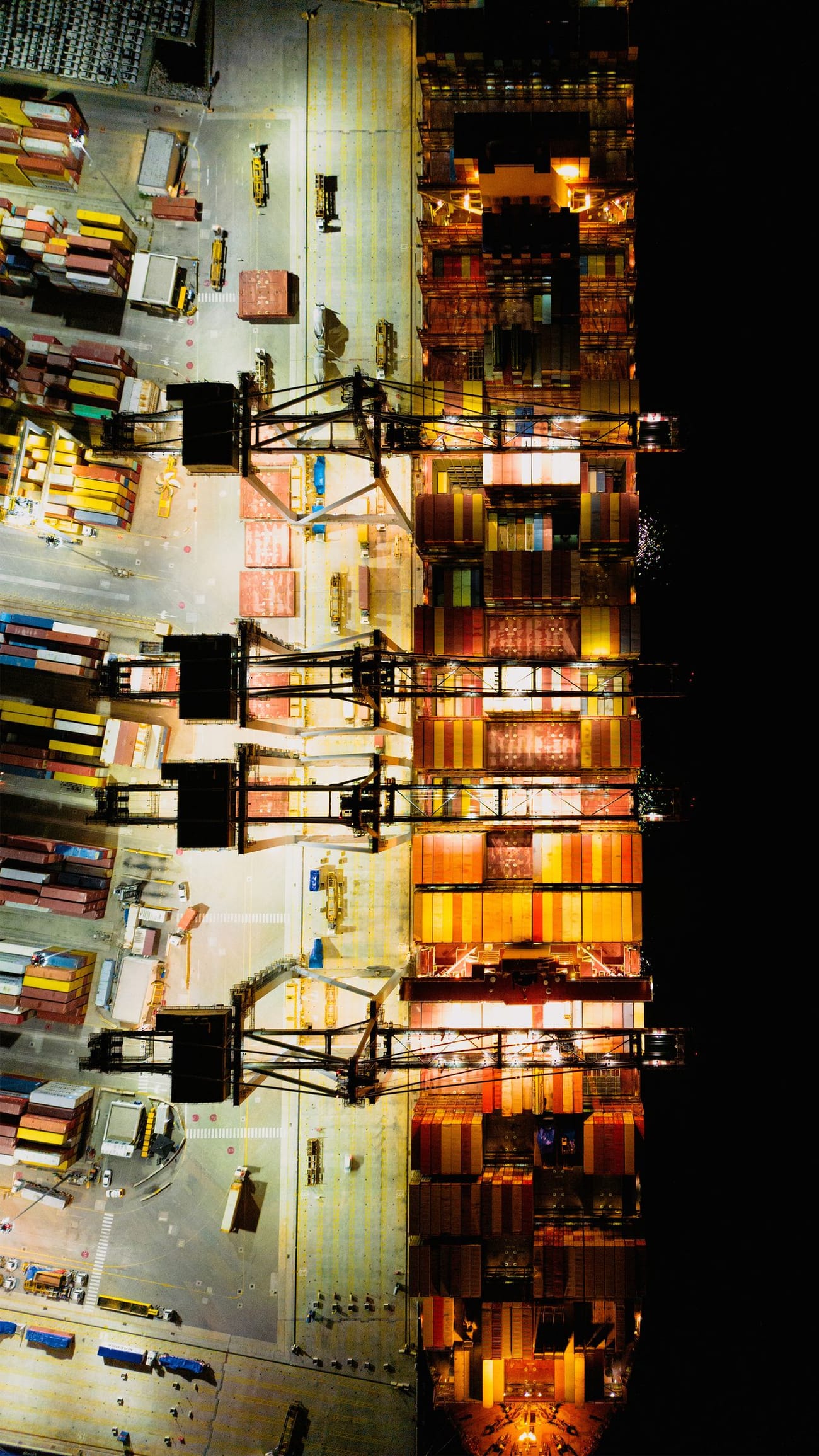
Gate-in was logged at 01:58. The box was then stacked four high in the export yard, where the tracker registered two sharp jolts as gantry cranes dug out boxes due to sail earlier. The ship was a day late from its previous port, which counts as punctual on this loop. Every day in the stack cost Phuoc An nothing directly, since the terminal allows a free period for export boxes, but the buyer in the Netherlands was already counting: the tables had been promised to shops for a date that assumed the ship would leave on time. On day seven, at 14:20, a quay crane lifted NRVU 418220-7 onto the deck of the Aurelian Star, a 14,000-TEU ship on Halcyon Line's Asia–North Europe service, in bay 34, fourth tier up.