
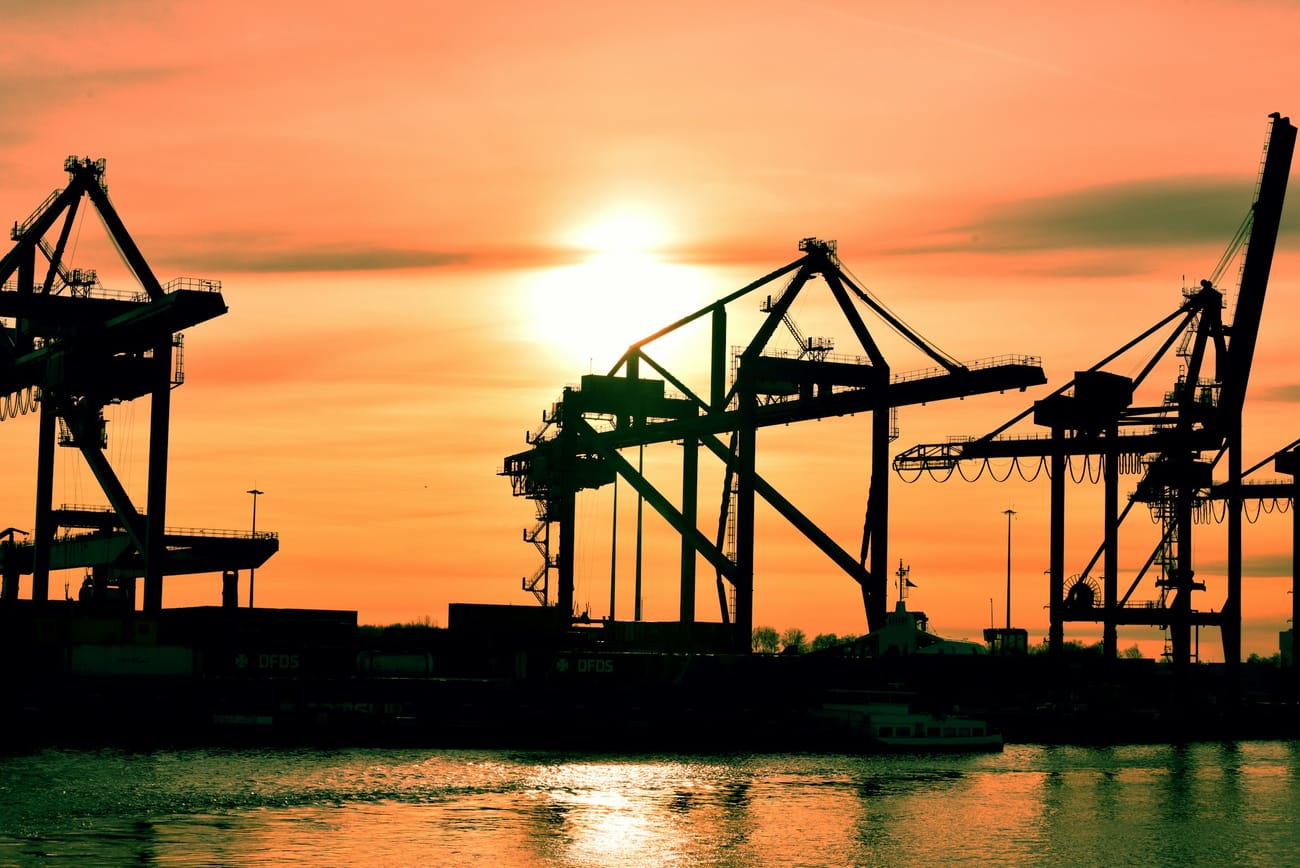

Ask a harbour master what a berth costs and you will get a tariff book. Ask what the same berth is worth at 06:00 on the first morning after a storm, with fourteen ships at anchor and three terminals asking for the same slot, and you will get a longer silence.
That silence is the problem. Ports are the most valuable pieces of infrastructure most countries own, and most of them still price their scarce hours as if every hour were the same.
The flat fee problem
Port dues are usually charged on the size of the ship: its gross tonnage, sometimes its length, occasionally the cargo it lands. A 14,000-TEU ship that arrives on schedule into an empty port pays the same as one that turns up two days late into a queue and takes a berth that four other ships wanted. The late ship's costs fall on everyone else, in waiting time, fuel burned at anchor and missed connections inland. It does not see them on its invoice.
The terminal sees them, of course. So does the trucking company whose drivers wait at the gate, and the rail operator whose train leaves half full because the boxes it was meant to carry are still on a ship outside the breakwater.
In most other networks this would be called a pricing failure. In ports it is called the tariff.
What roads and airports learned
Cities that charge drivers more to enter the centre at peak hours did not do it because they dislike cars. They did it because a road at capacity delivers less than a road just below it, and a price is the cheapest way to move a few journeys out of the rush. Busy airports learned the same lesson with take-off and landing slots decades ago. A slot at breakfast time is scarce, so it costs more, and airlines schedule around that.
Nobody thinks this is radical any more. It is simply how you run a congested asset. The port is the exception, and I have never heard a convincing reason why.
A tariff with a clock in it
A congestion-aware port tariff does not need to be clever. It needs three bands: quiet, normal and peak. It needs to be published far enough ahead that carriers can plan rotations around it. And it needs a rule for ships that miss their window: a late arrival pays the peak rate whatever hour it actually comes in.
When I modelled this for a mid-sized northern port a few years ago, using its own berth logs, a peak surcharge of around 25% moved enough calls into the shoulder hours to cut average anchorage waiting time by close to a third. The total take from dues barely changed. What changed was who paid it.
Emissions at the berth
The same logic applies to what a ship does while it waits. A vessel at anchor or alongside runs its auxiliary engines for power, and in many ports that means diesel exhaust drifting over the houses closest to the water. Where shore power exists, plugging in is often optional, and the price of shore electricity is set to compete with bunker fuel rather than to reflect the cost of the air.
A port that charged for berth time according to what a ship burns while it sits there would make shore power the obvious choice and make idling at anchor visible on a balance sheet. The engineering is done. Only the price is missing.
Who objects
Carriers will say they cannot control their arrival times because weather and upstream ports decide them. Partly true. But airlines face weather too, and they still plan to their slots. Shippers will say the cost will be passed on to them. It will, and it should be, because at present they are paying for congestion anyway, only in delays that nobody itemises.
Ports themselves are the most reluctant, because a clear price invites a clear argument. I would rather have that argument than the one we have now, in which everybody waits and nobody is billed for it.





Discussion