
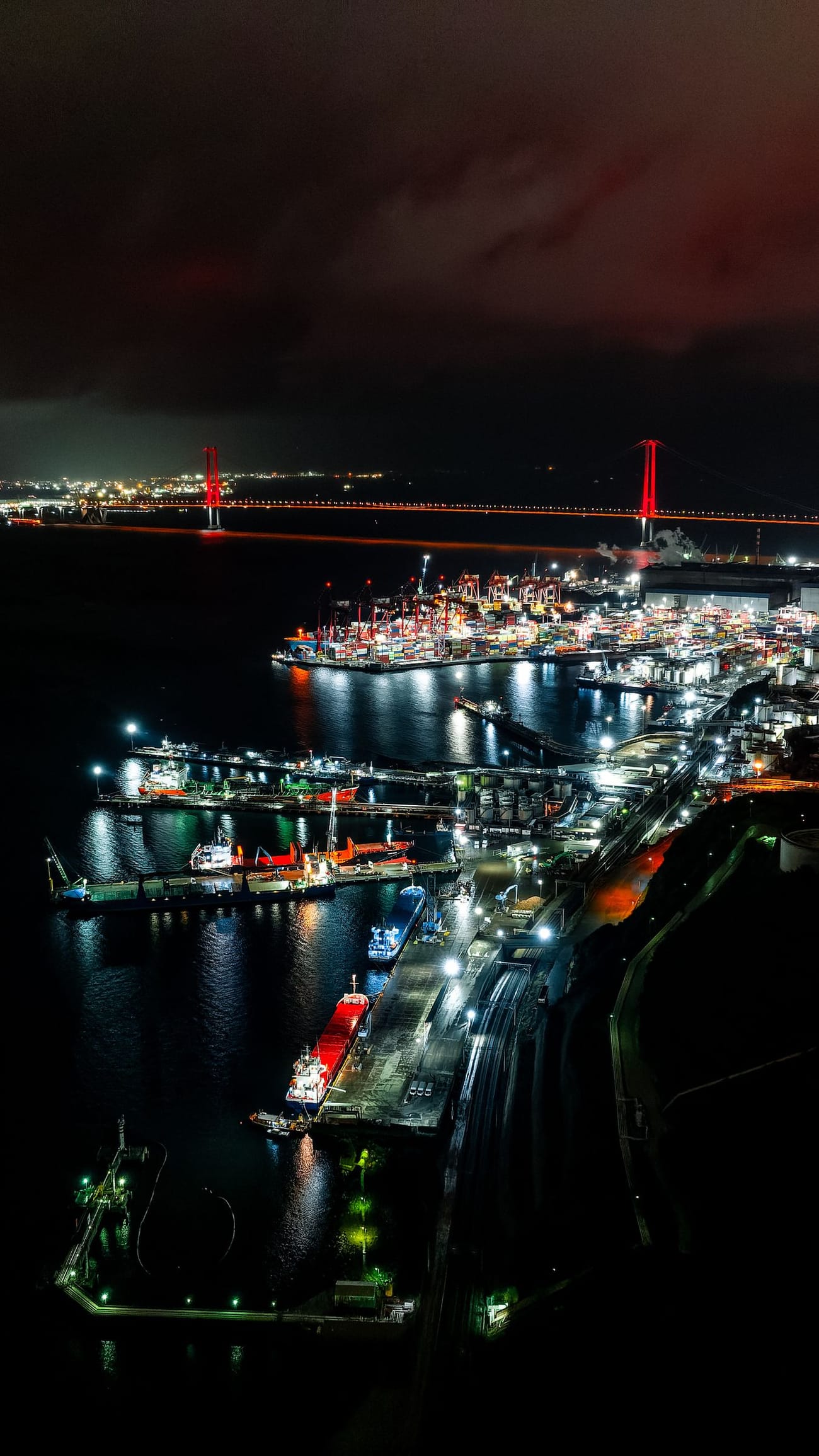

Hiroshi Kume keeps two clocks in his office above the harbour in Imabari. One shows Japan time. The other shows New York, where the dollar is set for the day, and he says it is the more useful of the two. His company, Kume Kisen, owns fourteen bulk carriers. None of them has called at Imabari in years. All of them are chartered to operators abroad, and all of them earn their living in dollars.
"The ship works in dollars, the family lives in yen," Kume says. "Everything we do in this office is about the space between the two."
Dollars in, yen out
Japan's independent owners, many of them family businesses clustered around the Seto Inland Sea, run a simple model. They order ships from domestic yards, borrow from regional banks and charter the finished vessels for years at a time to large operators, often at fixed daily rates in dollars. The hire comes in dollars. The office, the staff, the local taxes and a good share of the loan repayments go out in yen.
That makes USD/JPY the most important number in the business after the charter rate itself. When the yen weakens, every day of dollar hire converts into more yen, and the margin widens without anything changing on the ship.
The crews are mostly Filipino and Indian, hired through manning agencies and paid in dollars, so they sit on the same side of the ledger as the income. Dry-docking bills from Chinese repair yards are dollars too. What remains in yen is the part of the business that lives in Imabari itself: the office of eleven people, the accountant, the property tax on the warehouse and, for many owners, the bank.
The arithmetic of a weak yen
Take one of Kume's Kamsarmax bulk carriers, chartered at $15,000 a day. At 130 yen to the dollar, that is ¥1.95m a day. At 145 it is about ¥2.18m. Over a year, the difference comes to roughly ¥82m for a single ship, before a tonne of cargo moves differently.
Across the fleet, the effect is large enough that Kume's banker, Aiko Shimizu of Setonaikai Maritime Finance, reviews his covenants against the exchange rate before she looks at freight markets. "For our clients, a weak yen is a better year than a strong freight market," she says. "Freight they can lose. The currency effect goes straight to the loan."
How the loans are built
Not every owner benefits equally. The answer depends on the currency of the debt. Owners who borrowed in dollars against dollar charters have matched books: the yen's move barely touches them. Owners who borrowed in yen gain the most from a weak currency, because their debt shrinks relative to their income.
Many use tax-driven lease structures, in which Japanese investors own the ship through a special-purpose company and the owner charters it back with an option to buy. These deals are usually denominated in dollars, but the investors measure their return in yen, and a weaker yen makes the option price look cheaper when the time comes to exercise it.
Ordering while the yen is cheap
The more visible effect is at the yards. Japanese shipbuilders quote many newbuilding contracts in yen. When the currency is weak, a ship ordered in yen but chartered out in dollars looks cheaper to anyone measuring in dollars, and more profitable to the owner once it starts earning.
In our count of orders placed with yards on the Inland Sea over the past year, domestic owners accounted for a larger share than in any year since we started tracking them. Kume has two ships on order himself, both due in the second half of next year. "The yen chose the timing," he says. "I only signed."
When the yen turns
The same structure works in reverse. Owners who spent a weak-yen windfall on yen-priced newbuildings are now exposed to a stronger yen when those ships deliver and start earning dollars. Shimizu's bank has started asking clients to lock in part of their future hire at forward rates when they sign a construction contract.
Some do. Others prefer to keep the open position, reasoning that the charter market and the currency rarely turn against them at the same moment. Kume hedges about half. "My father hedged nothing and my grandfather did not know what a hedge was," he says. "I am the careful generation."
Shimizu says the owners who worry her are not the ones with open positions but the ones who have forgotten they have them. "A family that ordered three ships at the bottom of the yen will feel rich for two years," she says. "Then the ships deliver."
The second clock stays on the wall. For now, it is telling him what he wants to hear.





Discussion