
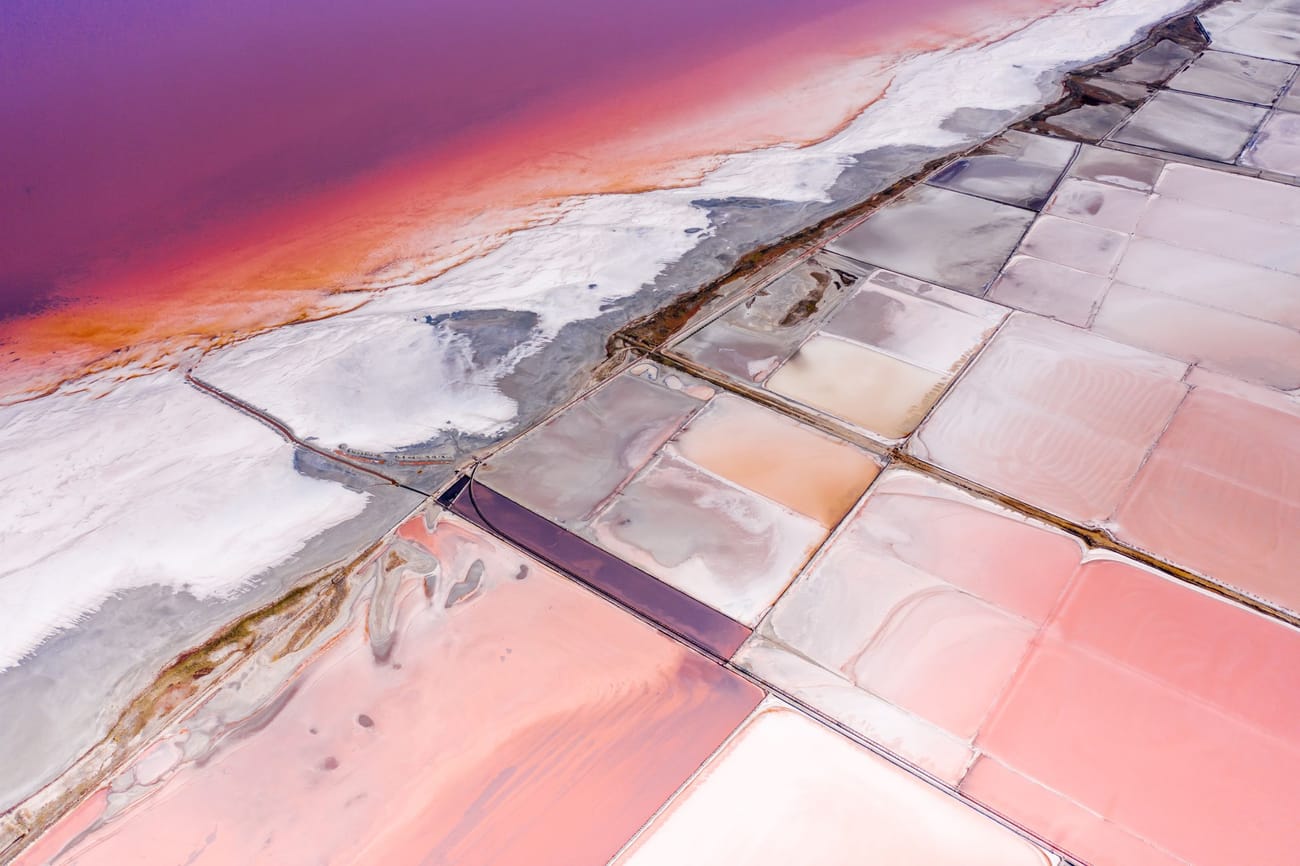

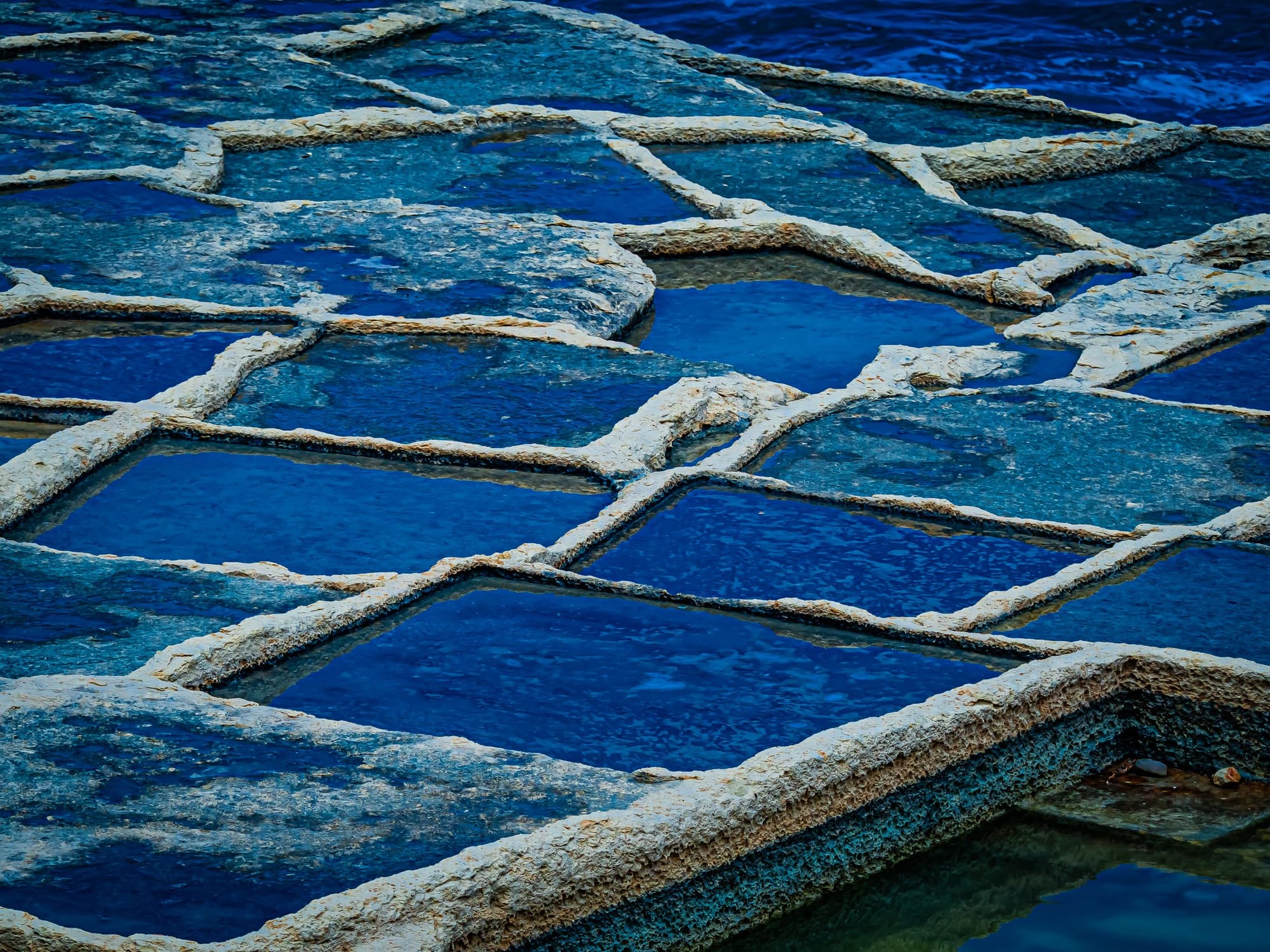
From the ground, a salt works is flat, hot and quiet, a grid of shallow pans behind a sea wall. From 120 metres up it turns into a paint chart. Over one year our photographers flew a drone above a family-run salt works on an Atlantic lagoon, returning each season to watch the colours change as the water did its work.
Salt is the cheapest commodity most of us buy and one of the most widely traded. This is where some of it starts.
Spring: letting the sea in
The year begins with a gate. At high tide in the spring, the salt workers open a sluice and let seawater into the first and largest ponds. From there it moves slowly inland through a chain of smaller pans, each a few centimetres shallower than the last. Nothing is pumped if it can be avoided. The sun and the wind do the work, and the salinity rises pan by pan.
Rui Matos, whose family has worked the pans for three generations, checks the water with a hydrometer that looks like a glass fishing float. "In April I am a plumber," he said. "In August I am a farmer."
Summer: the colour turns
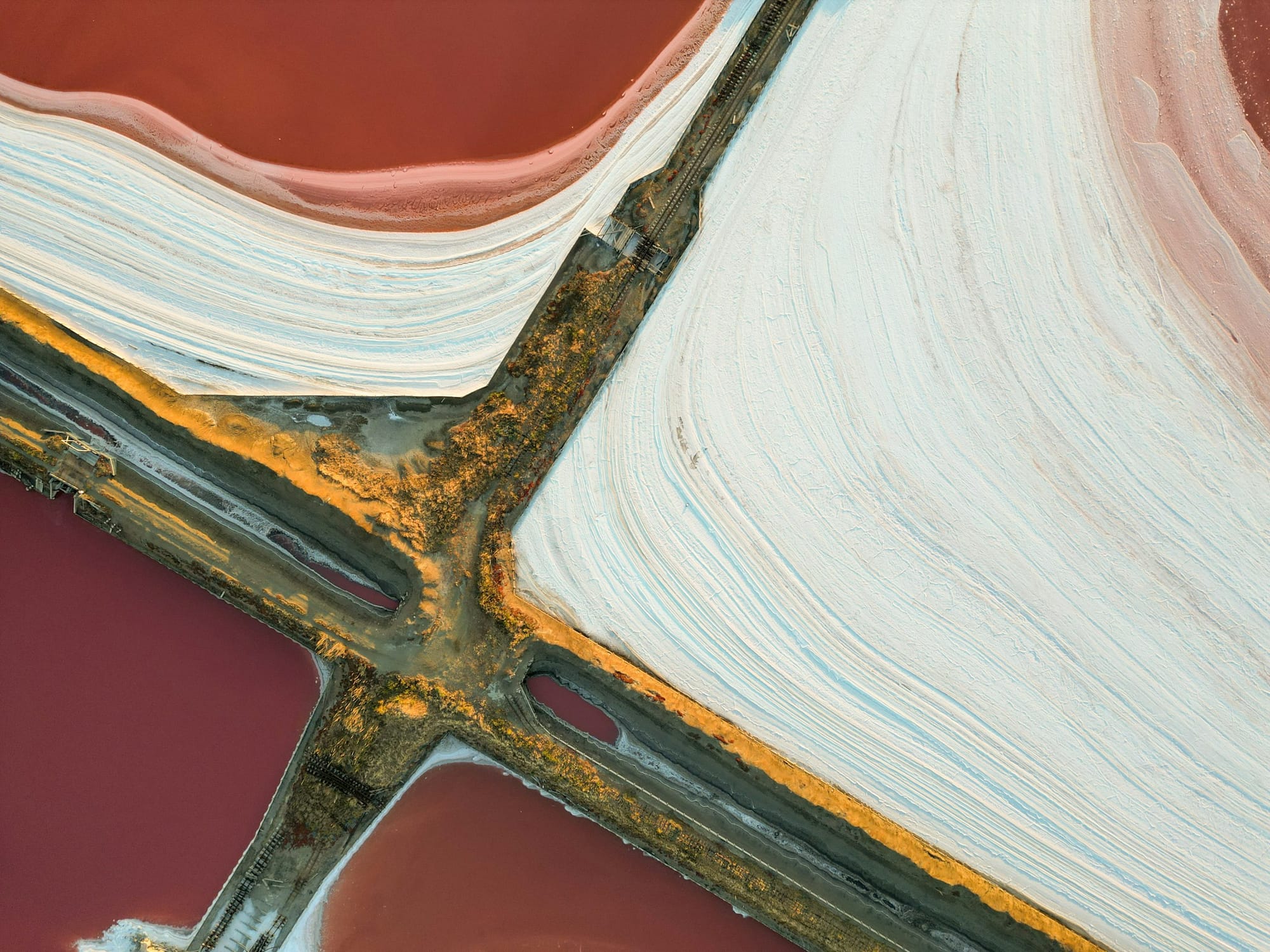
The colours in these pictures are not filters. As the brine concentrates, a single-celled alga that thrives in very salty water produces a red-orange pigment, and tiny brine shrimp that feed on it add their own pink. The less salty ponds nearer the sea stay green or turquoise. Seen from above, the whole works reads like a gradient: sea-coloured at one end, rose in the middle, white where the salt has begun to drop out.
Harvest
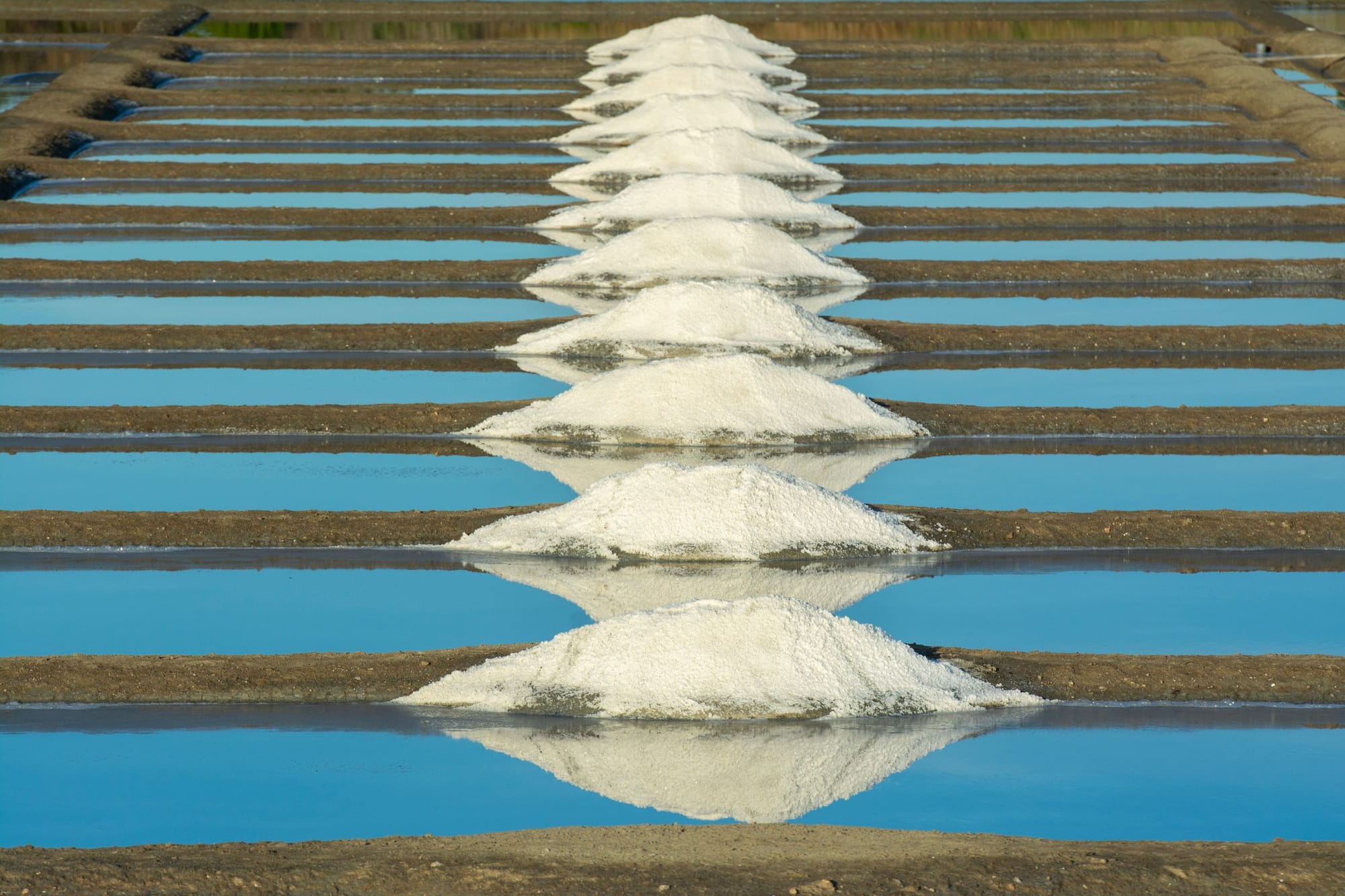
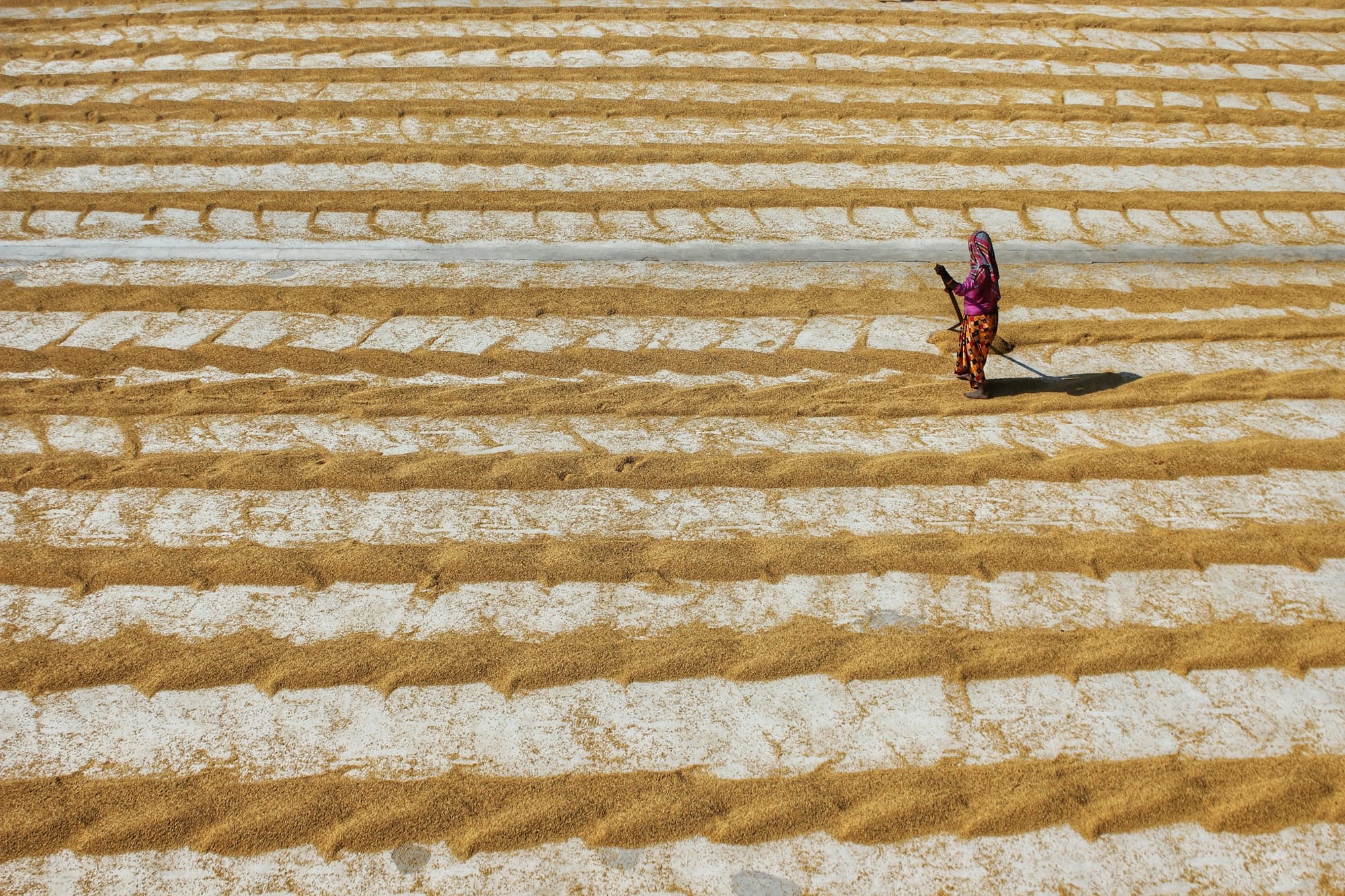
By late summer a crust forms on the final crystallising pans. The first layer, thin and fragile, is skimmed by hand with wooden rakes and sold at a premium as flake salt. The coarse salt below is pushed into long ridges, left to drain, then piled into white mounds taller than the workers who build them.
A good year here yields around 1,200 tonnes. A wet one can yield half that. A single heavy rain in August can dissolve a week of work. The salt workers watch the sky the way traders watch a screen, and in a bad week they rake at night, by the light of a van's headlamps, to save what they can before a front arrives.
Winter: the pans rest
After the harvest the mounds are covered and the pans left to the rain and the wading birds. The salt workers repair the clay walls, clear the channels and wait. By midwinter the colours have gone and the works looks, from the air, like an abandoned chessboard.
What a tonne is worth
Most of the world's salt is not eaten. It goes to chemical plants, water treatment and winter roads, and much of it is mined rather than evaporated. Sea salt from small works like this one sells into a narrower market of food, restaurants and export shops, where the price per tonne can be many times that of road salt.
Matos sells about a third of his harvest to a trader who ships it north in bulk bags. "They pay for the colour on the label," he said, pointing at the pink pans. "They never see it."





Discussion