
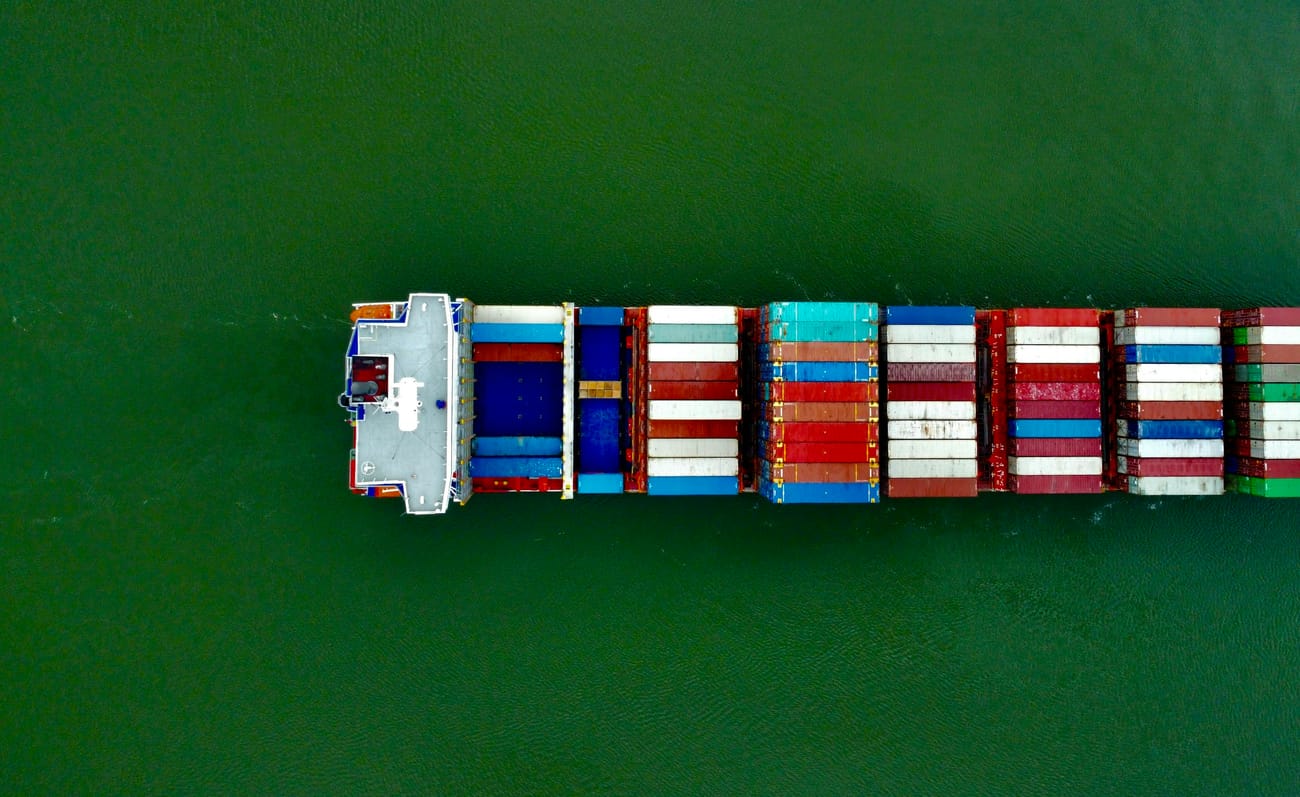

The Panama Canal is a staircase of water. A ship rises through three locks to a lake in the middle of the isthmus, crosses it and steps down the other side, and every step lets fresh water run out to the sea. That water comes from rain. In a dry year there is less of it, and the ships that pay the highest tolls in the world start to carry less.
For a carrier with services through the canal, the dry season arrives as a planning problem months before it arrives as weather. We spent a week with the people who solve it at one of them.
A canal that runs on rain
The canal's summit is a man-made lake fed by the rivers of the surrounding rainforest. Each lockage fills a chamber from the lake and empties it downhill, so each transit spends tens of millions of litres of fresh water. The newer, larger locks recycle part of it through side basins; the older ones do not. The same lake also supplies drinking water to much of the country, and in a drought the ships and the taps draw on the same shrinking reserve.
When the lake falls, the canal's operator does two things, both published well in advance. It lowers the maximum draught a ship may have, and it reduces the number of daily transits. Either one hits a carrier's schedule. Both together rewrite it.
Draught is money
A lower draught limit means a ship must float higher, which means it must carry less. The effect is not linear, and it is not small.
"The first centimetres are cheap because you are cutting ballast and a bit of fuel," said Lucía Barrientos, Corvina's head of network planning. "After that you are cutting boxes. And the boxes you cut are the heavy ones, which are often the ones paying the best rate."
On a loop that already calls at six ports, those boxes have to be chosen before the ship reaches the first of them. Barrientos's team decides in Valparaíso which bookings will roll to the next sailing, sometimes three weeks before the ship reaches the locks.
Slots, bookings and auctions
Most transits through the canal are booked in advance. A carrier on a regular service reserves slots months ahead and pays for the certainty. When daily capacity falls, a share of the remaining slots is sold at auction, and ships without a booking either bid, wait in the anchorage or go another way.
Corvina books every one of its eleven rotations a season ahead and has never bid at auction. "Auctions are for tankers and gas carriers with a cargo worth more than the toll," Barrientos said. "Our margin on a container of frozen salmon does not survive a bidding war."
How one carrier plans a season
The planning cycle starts in the rainy months, when the lake is full and the question seems academic. Corvina's analysts compare the current rainfall with a set of dry-year scenarios and assign each one a draught. The fleet plan is then built three times: a normal year, a tight year and a severe year.
In a tight year, the carrier swaps its two largest ships out of the canal loop and replaces them with smaller ones that sail full at the reduced draught. In a severe year, it adds a call on the Pacific side where cargo can be moved across the isthmus by rail, and accepts the handling cost. "The severe plan is expensive," Barrientos said. "It is still cheaper than a ship sitting at anchor for nine days."
The long way round
For some trades there is no alternative worth the name. A ship from the west coast of South America to the US Gulf that avoids the canal must go round the tip of the continent, adding thousands of miles and weeks of charter hire. For Asia to the US East Coast, some carriers can switch to the Suez route, which trades one chokepoint for another. We look at the rest of them in Chokepoints, the lead story of this issue.
What the planners watch
On the second screen at Barrientos's desk sits a line chart of the lake level with the previous five years drawn faintly behind it. She checks it every morning before email. "When the line crosses last year's, I start calling customers," she said. "When it crosses the worst year we have, I call my boss first."
The pilots who take ships through have their own view of a dry season, which we heard from them in an earlier report.





Discussion