
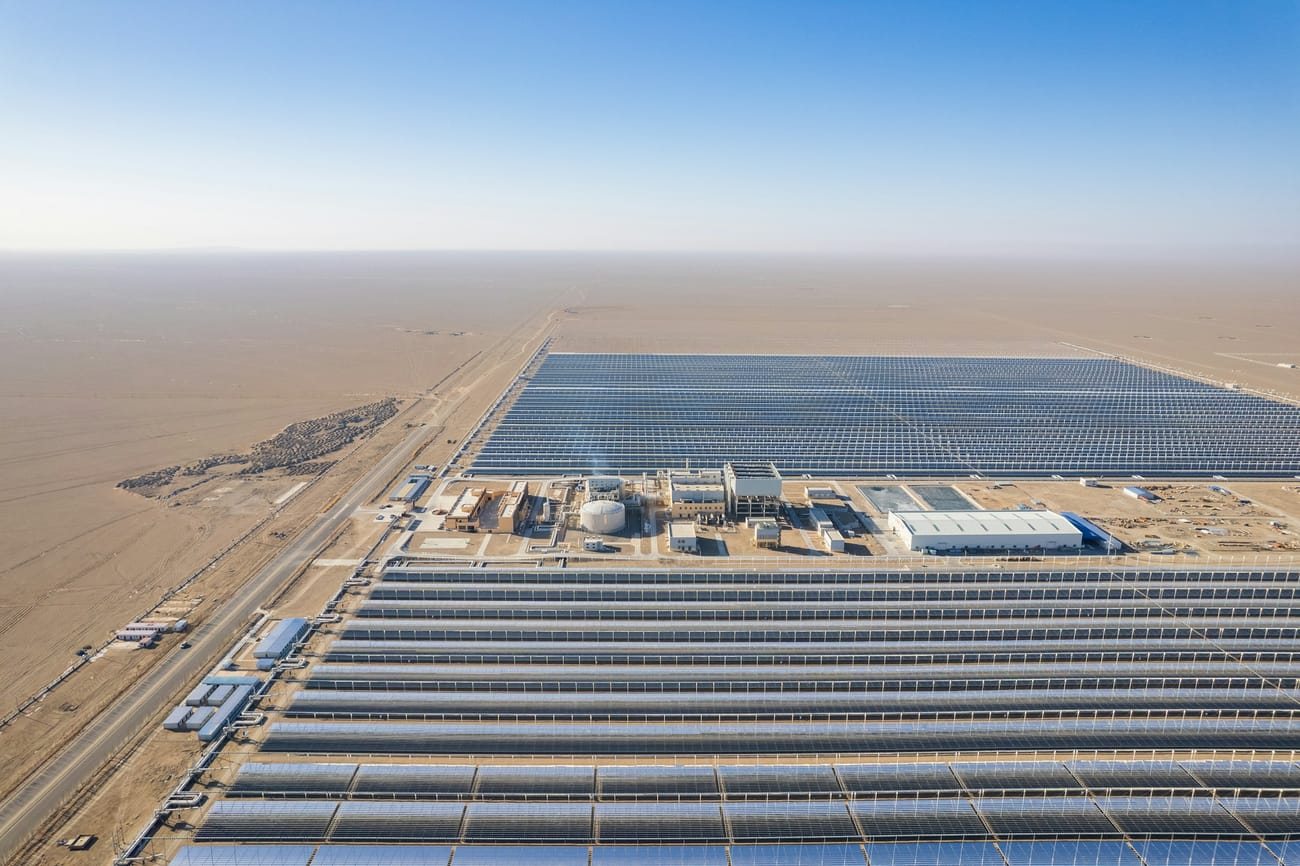

From the ridge above San Tadeo del Río, just after six in the evening, the industrial parks look like a spill of white tiles across the desert. There are 214 sheds now, by the town's own count, where twelve years ago there were forty. Their roofs throw the low sun back at the hills, and between them the trucks move in lines so regular they could be on rails.
San Tadeo sits on the Mexican side of the border in Chihuahua, eleven kilometres from a road bridge into Texas. It had 38,000 people when the first speculative warehouse went up. It has about 140,000 now. This is the story of what nearshoring built there, and of what it has not yet had time to build.
The road in
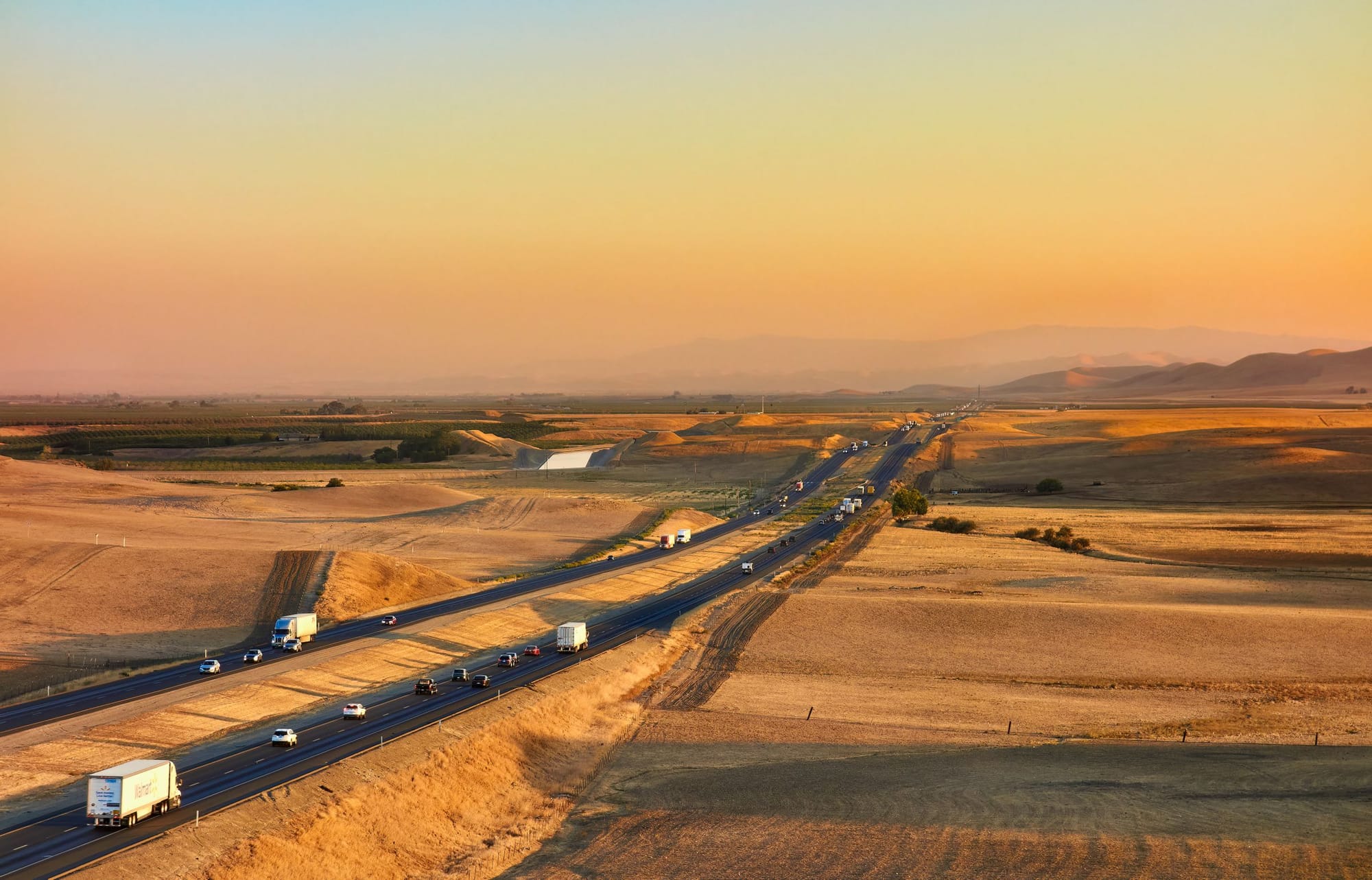
Highway 45 used to be a two-lane road with a petrol station and a roadside shrine every twenty kilometres. It is four lanes now, with a concrete divider and a truck lane that backs up for six kilometres on a bad morning. The shrines are still there. One has a small plastic container ship left among the candles.
Ramiro Olvera has driven the road for nineteen years, first hauling cattle feed and now hauling whatever the parks make: wiring harnesses, refrigerator doors, medical tubing, seat frames. He owns two tractors and rents a third. "When I started, I knew every truck on this road," he said. "Now I know the ones that break down."
He makes three crossings on a good day and one on a bad one. The difference is almost entirely the bridge.
How the parks arrived
The first shed
The first speculative warehouse, built before it had a tenant, went up on a former sorghum field on the east side of town. Its developer, a Monterrey family firm called Grupo Tresvalle, borrowed against land it had bought for a housing project that never happened. The shed stood empty for fourteen months.
"My father called it the most expensive shade in Chihuahua," said Arturo Belmonte, who now runs Tresvalle's industrial division from an office above a truck scale. "Then a harness maker from Ohio signed for it in one afternoon, and within a month we had three more calls."
Who moved in
The tenants came in waves. First were the plants that had always been in northern Mexico and wanted room to expand. Then, as freight rates across the Pacific spiked and stayed high, came firms that had built their supply chains around Asian factories and wanted a second source within a day's drive of their customers. Belmonte keeps a map on his wall with a pin for each tenant's head office. Most pins are in the American Midwest. A growing cluster is in East Asia: companies that now make parts in San Tadeo to sell to buyers they used to ship to across the ocean.
Tresvalle's parks are 97 per cent let. Rents have roughly doubled in eight years, Belmonte said, and the waiting list for sheds larger than 20,000 square metres runs to eighteen months.
The bridge at four in the morning
The crossing opens its commercial lanes before dawn, and by four the queue already reaches the last petrol station. On a busy day about 2,900 loaded trucks cross northbound, according to the San Tadeo Customs Brokers' Association, which counts them from its members' filings. Ten years ago the figure was closer to 900.
The bridge has not grown with the town. It has four commercial lanes, one of them reserved for trusted-shipper programmes, and an inspection yard on the far side sized for a much smaller place. A truck picked for secondary inspection can lose the rest of the day there.
The brokers' street
Calle Aduana, three blocks from the bridge, has 61 customs brokerages on it. Most are a single room with a counter, two screens and a printer that never stops. Ximena Duarte runs one of the larger ones, with fourteen staff working in two shifts.
Her clients are the park tenants. Much of what they make qualifies for preferential treatment under the regional trade agreement, but only if the paperwork proves it, and the proof depends on where every input came from. (We explain how that works for a single product in How a Bicycle Gets Its Nationality.) Duarte's team files about 1,100 entries a day.
The factories moved here for the border. Now the border is the slowest machine in town.
Duarte said it while watching a queue form on the monitor that shows the bridge cameras. She has asked her clients to ship earlier, and some now plan their lines so that finished goods leave the dock at three in the morning.
Houses behind the sheds
The workers arrived faster than the houses. The municipal planning office estimates the town is short of about 22,000 homes. New arrivals from Veracruz, Oaxaca and Central America rent rooms in the older neighbourhoods, often four or five to a room, or build without title on land at the western edge of town.
Some developers have started building beside the parks. Tresvalle has 1,800 small houses under construction on the far side of Highway 45. Belmonte admits the first ones were too far from schools. The next phase includes two.
Rosa Anaya, who works nights at a medical-device plant, spends 95 minutes each way on two buses. The factory runs a shuttle, but only from the town centre. "I earn more than my mother ever did," she said. "I also sleep less than she ever did."
Water
The parks use less water than people expect. Assembly lines are not thirsty, and most tenants recycle what they use. Houses, schools and clinics are another matter, and the desert under San Tadeo was never generous.
The aquifer ledger
The town draws almost all of its supply from one aquifer, and engineers at the municipal water utility say it has been drawn down faster than it recharges for most of the past decade. The utility's chief engineer, Efraín Legarreta, keeps a chart of the water table taped to his office door. The line slopes down by about 1.2 metres a year.
"Every new park asks us for a letter saying there is water," he said. "I write the letter. There is water. The question is for how long, and nobody asks me that in writing."
The utility is building a plant to treat wastewater for industrial reuse, paid for partly by a surcharge on park tenants. It is due to open late next year. Legarreta reckons it buys the town about a decade.
If the orders stop
San Tadeo's boom rests on a bet that American buyers will keep paying a premium for parts made a day's drive away rather than a month's sail. Freight rates across the Pacific have fallen from their peaks (our shipping desk tracks them in the weekly container rate report), and some tenants have started comparing again.
Belmonte is not worried about empty sheds. He is worried about hollow ones: plants that keep the lease but move the higher-value work somewhere else. Two of his tenants have cut a shift this year. Duarte's entries dipped over the summer for the first time in four years, by about 6 per cent, before recovering.
Trade policy is the other risk. The regional agreement is due for review, and every broker on Calle Aduana has a view on what that could mean for the origin rules on vehicles and electronics. None of them wanted to be quoted on it.
The evening shift
At a quarter to ten the shift change turns Highway 45 into a river of white buses. They pull into the parks in convoys, headlights on, and leave again with the day crews asleep against the windows. Olvera, parked at the truck stop with his third load of the day, watches them go.
He has thought about selling the tractors and driving a bus. The pay is steadier. But the bus goes round the same loop all night, and the truck, however slowly, goes over the bridge. "At least I leave," he said.





Discussion