
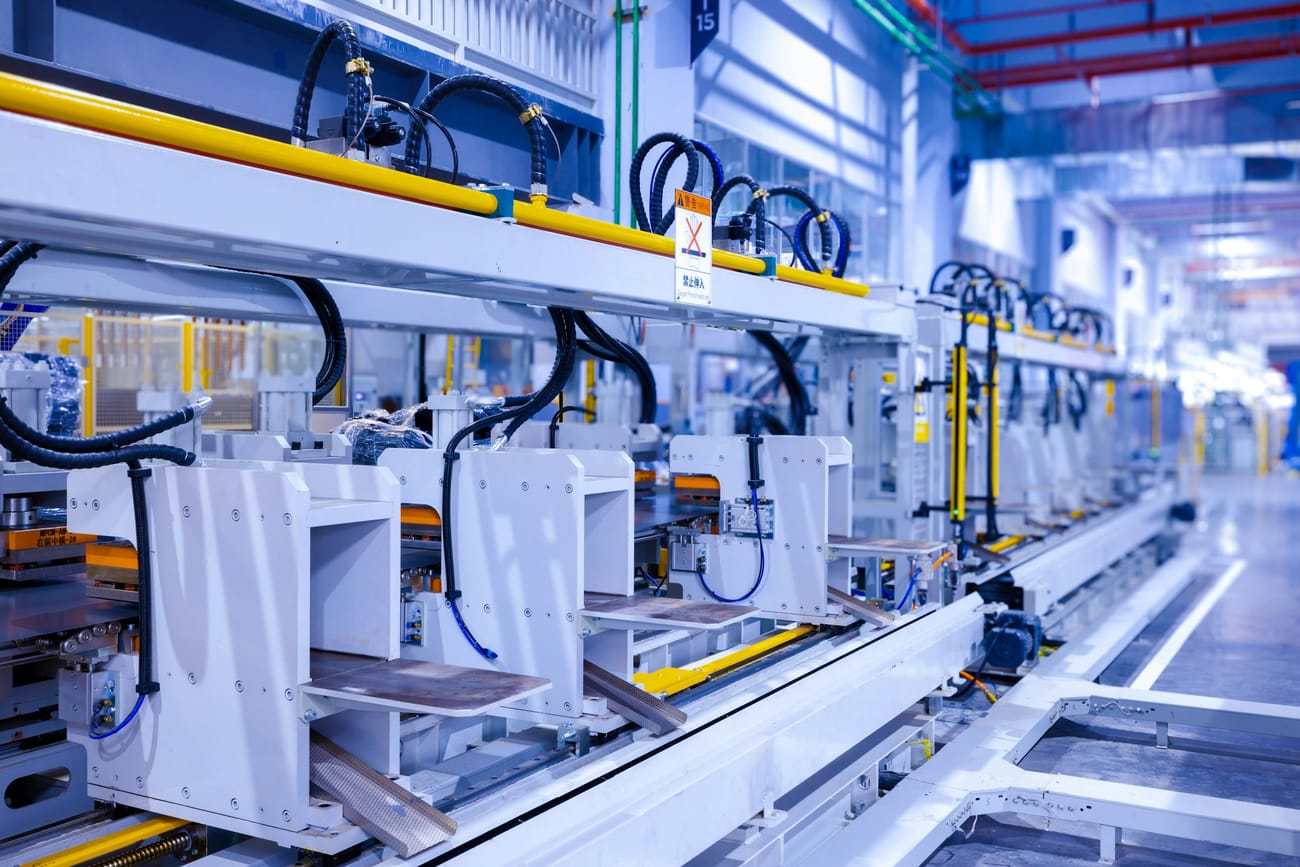

Velsdorf, a town of 14,200 in Lower Saxony, used to make boilers. It now makes one thing: the VL-9, a 9-kilowatt air-to-water heat pump the size of a washing machine, finished in white and shipped on pallets of four. Last year the town's plant built 58,000 of them. When the order book moves, so does the town.
We spent a week with the plant's figures and the people behind them, to see what it means when a local economy runs on a single product.
One product, one town
Velsa Wärme employs 1,140 people. By our count from the town's own employment register, that is 38 per cent of all jobs in Velsdorf, and closer to half once the suppliers, the canteen contractor and the haulier who runs the plant's trucks are included. The company paid about 61 per cent of the town's local business tax last year.
"When I took this job, people asked me about the school and the swimming pool," said Jens Harms, the mayor. "Now they ask me about compressor deliveries."
From boilers to compressors
The plant made gas boilers for 47 years. Seven years ago its owners stopped developing new ones and put the money into a single heat pump design. The last boiler line closed three years ago.
Sabine Oltmann, the plant manager, said the choice of one model was deliberate. "Four products would have meant four supply chains and four lines half full," she said. "We would rather run one line full." The VL-9 uses propane as its refrigerant, which let the company avoid a redesign as rules on older refrigerants tightened.
The order book
The plant's monthly output tells the story of the market. It rose to 6,100 units in the best month of the year before last, fell to 3,700 early last year, and has recovered to about 5,200. Over the same period the workforce did not shrink; Velsa put 300 people on short time for five months instead.
The effect showed up in town before it showed up in the accounts. The bakery opposite the plant gate, which sells about 400 rolls before the early shift, said sales fell by a quarter during the short-time months. The driving school had its best year: workers with spare afternoons took their truck licences, and several now drive for the plant's haulier.
Subsidies and a six-week lag
Most VL-9s go into existing homes, and most of those homeowners use a grant. Ms Oltmann's planners have learned that any change in the rules for home heating grants reaches the order book about six weeks later, the time it takes installers to use up quotes already signed.
"We cannot plan around politics, so we plan around the lag," she said. The plant now keeps six weeks of finished stock and four weeks of compressors, about double what it held as a boiler maker.
Retraining the line
Dieter Brandt, 54, spent 26 years brazing heat exchangers for boilers. He now tests refrigerant circuits at the end of the line, a job that required four months of training and a certificate for handling flammable gases. "The brazing is the same," he said. "What is inside the pipe is different. Propane teaches you to be tidy."
About 400 of the plant's current staff came from the boiler lines. Velsa says 85 per cent of them completed the retraining; the rest took early retirement or moved to the warehouse.
Export plans
To reduce its reliance on one national market, the company wants exports to rise from 18 per cent of sales to 40 per cent within three years, with Poland, Denmark and Ireland first. A second line, due to open next year, would lift capacity to 90,000 units.
Mr Harms has already approved the extra parking. He has not yet decided what the town should do if the second line runs half empty. "We bet on one product once and it worked," he said. "Nobody here wants to find out what the second bet looks like." The rest of the transition's cargo is on the energy desk, including the battery park next to the substation.





Discussion