
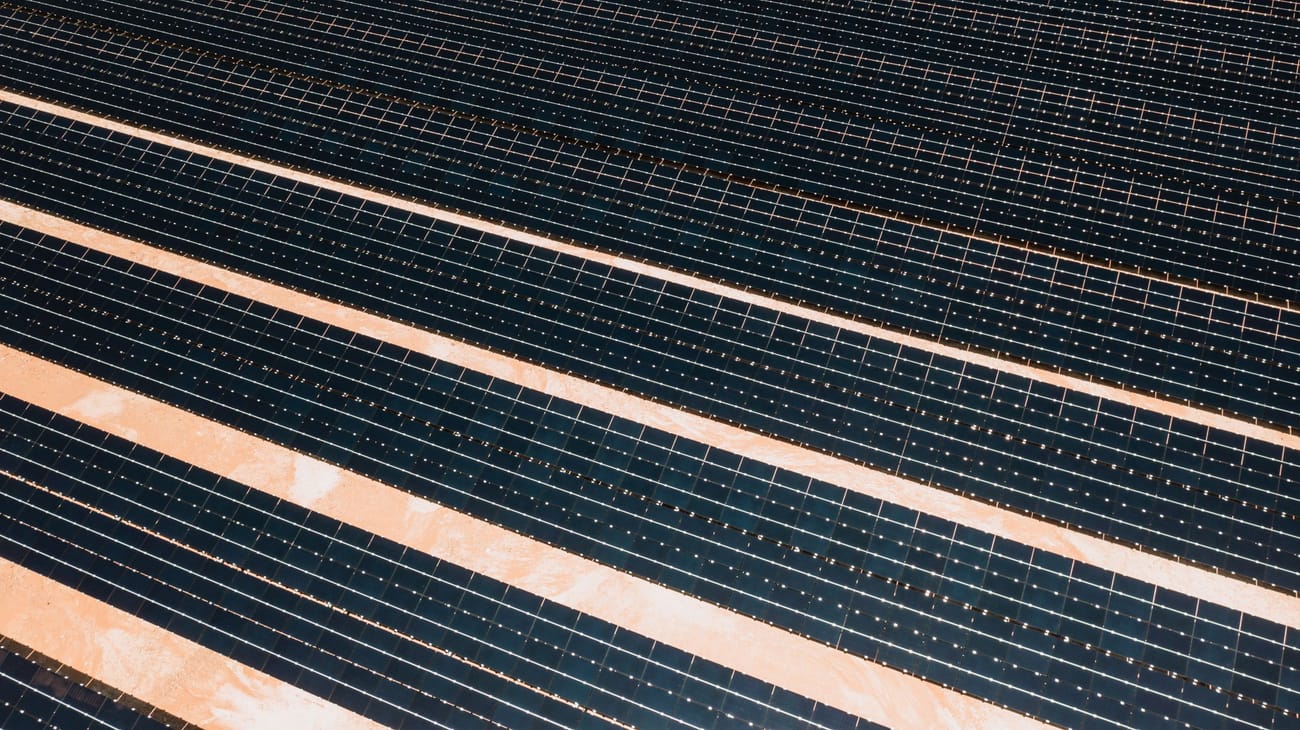

Aisle fourteen of the Portside Bonded Logistics warehouse, ten minutes' drive from the container terminals on Rotterdam's Maasvlakte, is 140 metres long and eleven pallets high. Every pallet holds 36 solar modules in cardboard and shrink wrap. Wim Verhoeven, the site manager, keeps the count on a clipboard at the end of the aisle: 61 megawatts of generating capacity, not one watt of it connected to anything.
The pallets arrived in the winter. Most have not moved since. Across the port, in similar sheds, the same modules are waiting for a buyer at a price their owners can stand.
Aisle fourteen
The warehouse holds 190,000 square metres of stock, and about a third of it is solar. "Two years ago modules came in one week and left the next," Mr Verhoeven said. "Now I have pallets older than my forklift drivers' contracts."
Storage costs the owners about €4 per pallet per week. On aisle fourteen alone that is more than €260,000 a year, paid to keep goods whose value is falling.
Why keep it in bond
Goods in a bonded warehouse have entered the port but not the market. Import duty and VAT are due only when they are released for sale, so an importer holding stock in bond keeps that cash in the bank. It can also send the modules on to another country without paying duty in this one.
Uncertainty about trade rules adds a reason to wait. Several importers told us they would rather hold stock in bond than clear it and find that the terms for later shipments had changed. "In bond, you still have options," said one, who asked not to be named because his company is renegotiating its supply contracts. "Once it is cleared, it is just stock."
Prices at the floor
The Break module price survey, compiled monthly from quotes by eleven European distributors, put mainstream modules at 9.8 euro cents per watt this month, down from 14 cents a year ago. Much of the stock in aisle fourteen was bought at about 16 cents.
That makes the stack worth about €6 million at today's prices against €9.8 million paid. The loss is only on paper while the pallets stay put, which is part of why they do.
The write-down season
The paper is running out. Solvik Distribution, one of the larger module wholesalers in the Benelux, wrote down its inventory by €48 million in its half-year results and said it would sell older stock "at whatever the market clears". Its finance director, Lotte Janssens, said the company had carried too much stock for too long. "We treated inventory as a hedge against shortage," she said. "The shortage did not come back."
Installers are not complaining
For the people who put panels on roofs, the glut is a gift. Ana Brouwer runs a 30-person installer in Utrecht. Modules used to be about a third of her cost for a typical home system; now they are under a fifth. "The customer pays for scaffolding, labour and the inverter," she said. "The panels are almost the cheap part."
Her difficulty is the grid. In parts of her region, new rooftop connections wait months for approval, so cheaper modules do not turn straight into more installations. She now quotes customers a panel price valid for a week and a connection date she cannot promise at all.
What would clear the stack
Mr Verhoeven has seen gluts end before, in bicycles and in flat-screen televisions. The end, he said, usually looks like a quiet week: a forwarder calls, forty trucks come, an aisle empties. He has no such call booked. On the day we visited, one pallet left aisle fourteen, bound for a school roof near Breda. For the ships that install the other half of the transition, see offshore wind's vessel shortage.





Discussion