
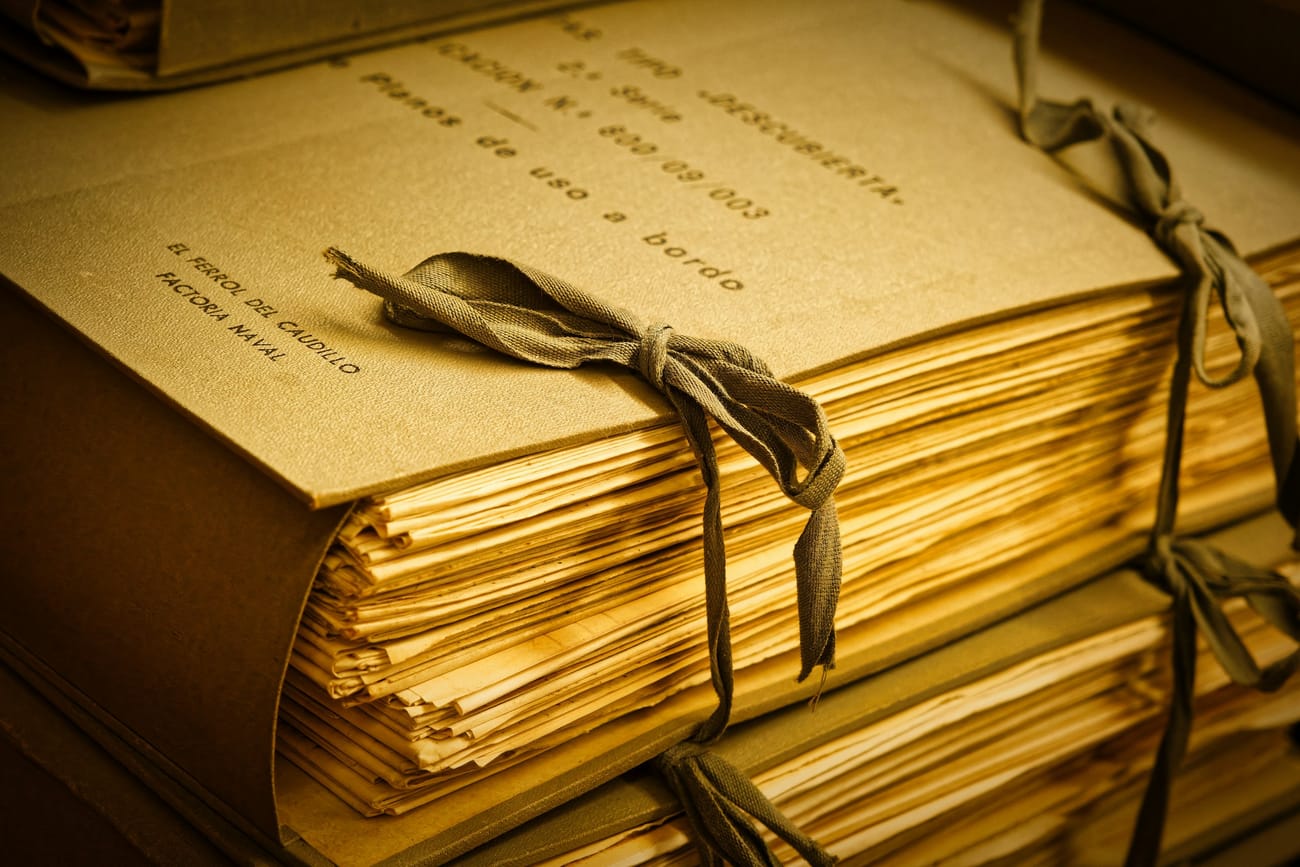

In a back room of Hanseatic Merchant Bank in Hamburg, six people spend their days reading paper. They check bills of lading, invoices, certificates of origin and insurance documents against the terms of letters of credit, line by line, looking for a misspelt port or a date one day too late. This episode of our trade-finance series spends a morning with them, as their paper starts to go digital.
Press play above to hear the full episode, about twenty-five minutes. A summary of what we found follows.
Three originals in an envelope
A bill of lading is a receipt for cargo, a contract of carriage and, crucially, a document of title: whoever holds the original controls the goods. Most are issued as a set of three originals. They travel by courier from the shipper to the seller's bank, then to the buyer's bank, and finally to the buyer, who hands one over to collect the cargo at the port.
Ingrid Sørlie, who runs the documentary credits desk at Hanseatic, keeps a courier envelope from the 1990s pinned to her wall. "Same size, same colour, same contents," she says. "Thirty years later we were still waiting for it."
The checkers' room
Under a letter of credit, the bank pays the seller only if the documents comply exactly with the credit's terms. That makes the checkers the last line before a payment. We watched Lukas Brandt, a checker for eleven years, reject a set because the weight on the invoice was written in kilograms and the credit asked for metric tonnes.
"People think that is pedantic," he says. "It is the job. If I pay against the wrong documents, the bank carries the risk."
The team handles about four hundred sets a month. Roughly half are rejected on first presentation, usually for small mistakes that the seller fixes within a day or two. Each rejection means another courier trip.
Why paper lasted
For decades, the law in most trading nations recognised only a physical original as a document of title. An electronic file could be copied; a paper original could not. Several jurisdictions have since changed their laws to give properly controlled electronic records the same standing, and the industry's platforms now issue electronic bills of lading that only one party can hold at a time.
The change took years of negotiation between carriers, banks and insurers, and each of them had to be persuaded that a file could not be forged or duplicated more easily than a stamped sheet. Adoption is still low. A bill of lading only works electronically if the carrier, both banks, the buyer and the seller are all on compatible systems.
What changes at the desk
Hanseatic processed its first fully electronic set this year, for a cargo of steel coils from the Baltic. The documents arrived in the bank's system within an hour of loading. Brandt checked them on two screens in the afternoon, and the seller was paid before the ship had cleared the Kiel Canal.
The courier envelope will not vanish soon. Sørlie estimates that nine in ten of the sets her team sees this year will still be paper. But she has stopped ordering new filing cabinets.
In this episode
- How a letter of credit works, explained with a single cargo of coffee.
- A courier's route from São Paulo to Hamburg, and what happens when a set goes missing.
- The checkers' most common reasons to reject a set.
- Why the electronic record still needs a bank to trust it.
For the story of another paper document that became a trading tool, read how a warehouse receipt became a trading weapon.





Discussion