
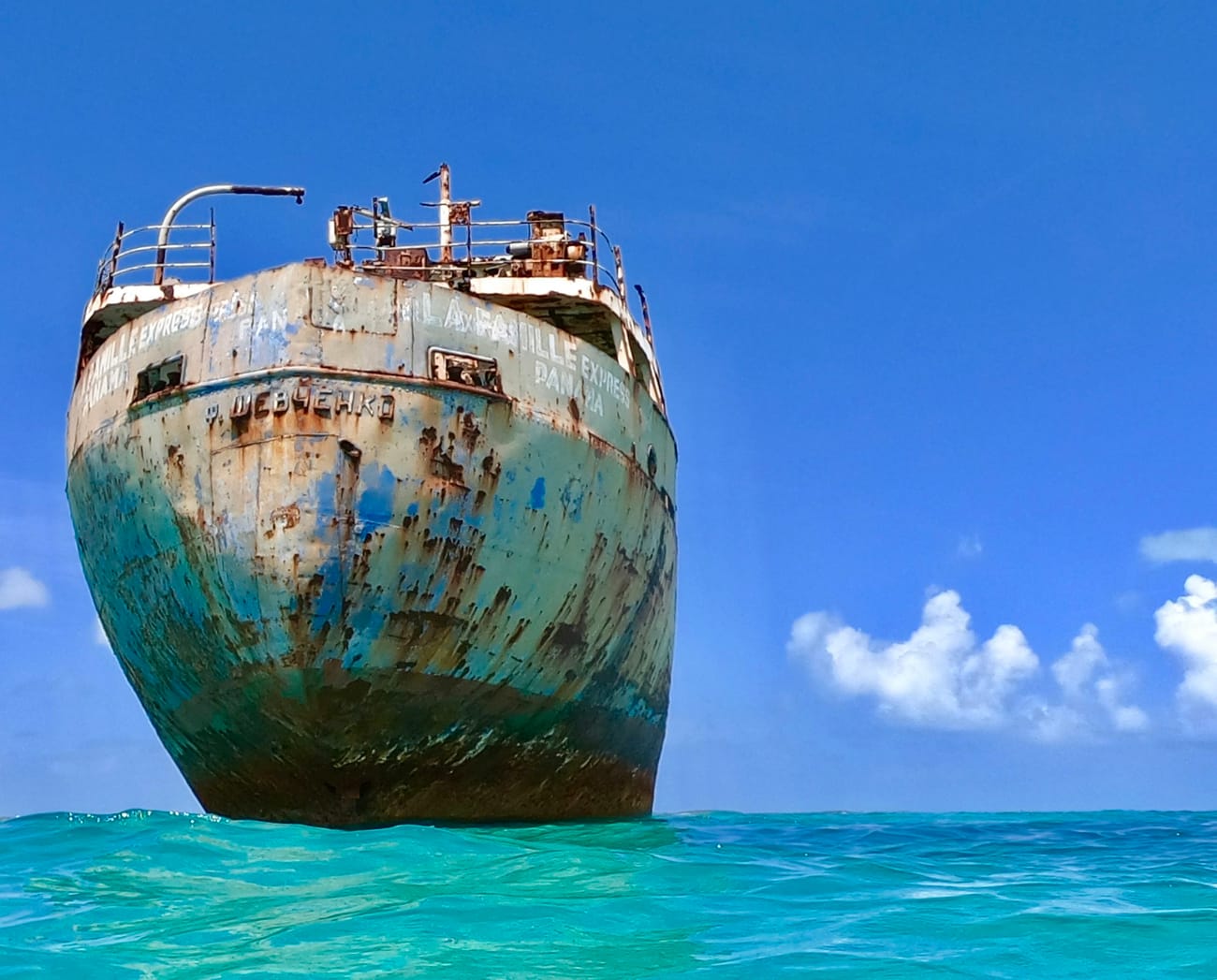

At high tide on the Gujarat coast, a retired ship can be driven at full speed onto the mudflats and left there when the sea goes out. For four decades that is how most of the world's merchant fleet has ended its life: run aground on a beach, then cut apart by hand where it stopped, with the tide washing over the pieces twice a day.
Sagarmani Recycling, a family yard on the Alang shore, is trying something else. Behind its plot, a concrete dry dock the length of a large tanker is nearly finished. From early next year, ships will float in, the gate will close and the water will be pumped out before the first torch is lit.
Seventy ships a year
Sagarmani has broken ships since the 1980s. It handles between sixty and seventy a year, most of them bulk carriers and small tankers bought through cash buyers who purchase ships from their final owners and resell them to the yards. The business runs on steel. Around nine-tenths of a ship's lightweight is steel plate and sections, which are cut, trucked inland and re-rolled into reinforcing bar for the construction trade.
"The beach is fast and the beach is cheap," said Harshad Solanki, the yard's managing director and the founder's son. "It is also the reason European owners will not sell to us. We are building the dock to be allowed into that market."
How the dock works
The dock is 320 metres long and 48 wide, cut into the shore and lined with reinforced concrete. A floating gate closes the seaward end. Once a ship is inside and the water is gone, it sits on keel blocks above a sloped floor with drains that run to a treatment plant, so oil, paint chips and bilge residues are collected instead of reaching the tide.

Cutting starts at the top and works down. Large blocks are lifted out by two crawler cranes onto an impermeable slab beside the dock, where they are cut into truckable pieces. On the beach the same blocks fall onto sand.
The price of a clean floor
The dock cost Sagarmani the equivalent of $38m, most of it borrowed. The yard also expects to work more slowly, breaking perhaps forty ships a year in the dock instead of seventy on the beach.
That discount is the bet. Solanki hopes owners who care about how their ships are broken, or whose rules require it, will accept a lower price in exchange for a yard they can defend. Steel prices will decide the rest: if re-rolled bar falls, every yard pays less, and the gap between the beach and the dock becomes harder to justify.
The cutters
Ramesh Yadav, 38, came to Alang from Odisha nineteen years ago and has cut steel on the beach ever since. He has a scar across his left forearm from a plate that slipped. He will move to the dock when it opens, on a contract that includes insurance, a canteen and, for the first time, a shift that ends when the light fails rather than when the tide comes in.
"On the sand you watch the water and you watch the plate," he said. "In the dock there is only the plate. I think that is better."
The yard's safety officer, Meera Joshi, is training forty cutters on the new layout before the first ship arrives. The dock lets her do things the beach never allowed: fixed scaffolding, fume extraction at the cutting stations, a fire line along the dock wall.
Who will send ships
Sagarmani is applying for the certifications that the international convention on ship recycling, now in force, requires of every yard, and for the stricter approvals European owners must look for. Solanki says he has letters of interest from two shipowners, and none yet for a specific ship.
The first candidate may come from the glut described in this week's freight report: as rates fall, older container ships stop earning their keep. "Everyone says they want clean recycling," Solanki said. "We will know if they mean it when the first owner accepts fifty dollars a tonne less."





Discussion