
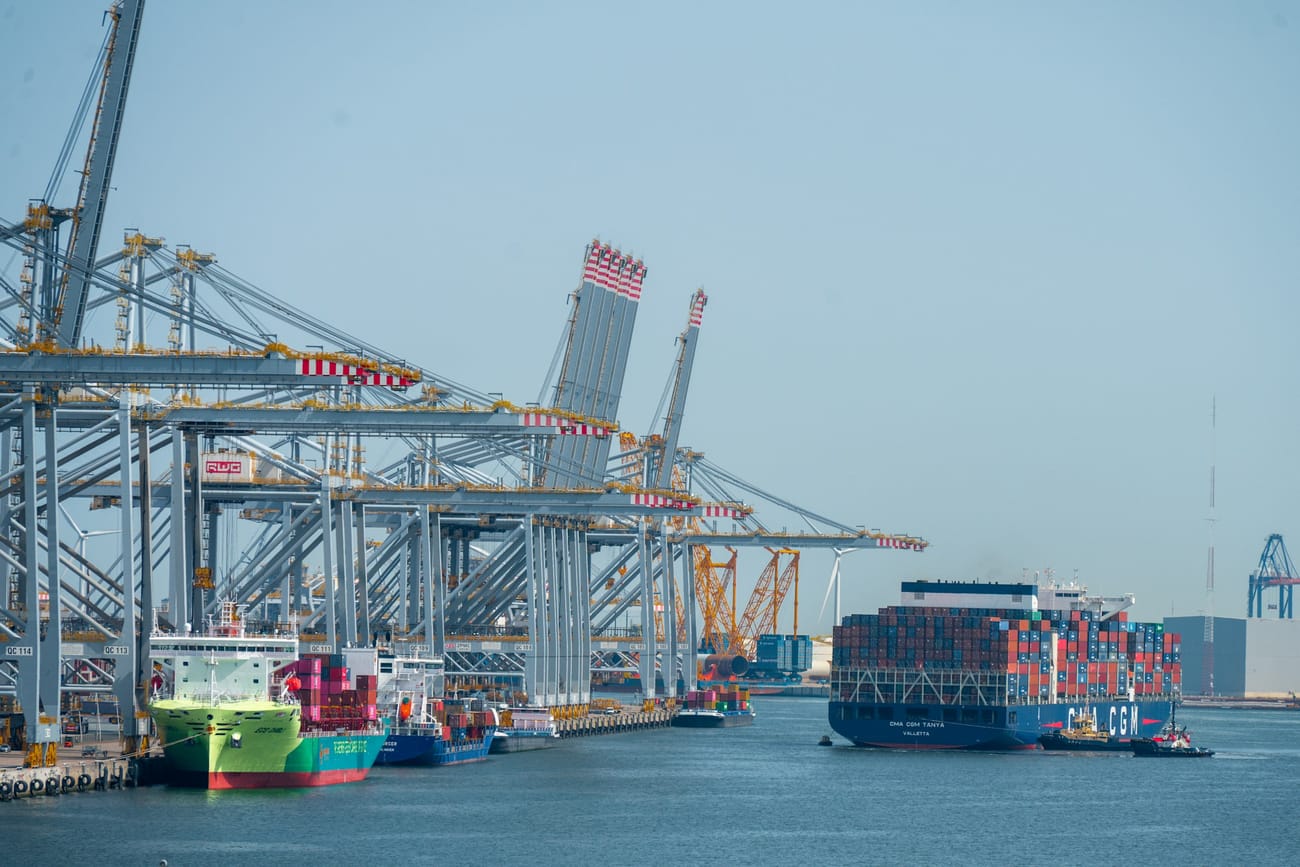

Good morning. The cranes at Maasvlakte are lit but barely visible; the mist came in off the water overnight and has not moved. Four things on our desks today, including a podcast for the way home.
A theme runs through all of them, and it is the cost nobody puts on the invoice: the currency a freight bill is paid in, the fee a smelter pays to keep its furnaces fed, the gas a ship burns because it cannot keep it cold enough.
Freight still bills in dollars
A furniture maker in Stuttgart buys in euros, sells in euros and still pays for every container in dollars. Almost the whole of container shipping is invoiced that way, and the exchange rate between booking and payment can move more than the freight rate itself. Jonas Halvorsen explains why the habit persists, what it costs a euro-based shipper, and the simple hedges most of them still do not use.
The short answer: fuel, ships and loans are priced in dollars, so carriers want their revenue in the same money. The shipper carries the risk by default, often without noticing until the quarter's numbers come in.
Copper's quiet squeeze
Smelters are paying miners to take their ore. The fees that usually flow from miner to smelter for turning concentrate into metal have fallen below zero in our survey of smelters, a sign of too many furnaces chasing too little concentrate. Tomás Reyes on what negative charges mean for the plants that depend on them.
The ship that burns its cargo
An LNG carrier loses part of its cargo on every voyage, on purpose. Gas warms and boils off through the tank walls, and the ship burns it in its engines rather than vent it. Priya Venkataraman went aboard to see how the tanks work, and why owners are fitting plants that turn the gas back into liquid.
The Manifest, episode 40
This week's episode of our podcast is out this evening. The desk talks through the fog season on the North Sea, the copper supply roads of the Andes and a feeder operator preparing to sail without a crew. Listen here from six o'clock, or find it wherever you get your podcasts.
Figure of the day
0.1%: roughly the share of an LNG cargo that boils off each day at sea on a modern carrier. On a three-week voyage, that is a few hundred tonnes of gas, almost all of it burned for propulsion. The newest ships lose less, and the gap between old and new tanks is now a line item in charter negotiations.
Back tomorrow, same time.
Maren Okafor, shipping editor





Discussion